OtonomArt, Ernest Cole and audiobooks
OtonomArt
I finally did it. I finally found a tutor for sculpting. Actually, what I found is much bigger than just a tutor. I found a workshop, a collective, a mirage in the middle of the desert. Actually… in the middle of an industrial zone.
On Friday I went to OtonomArt for an introductory sculpting class. I made this relief with mud:
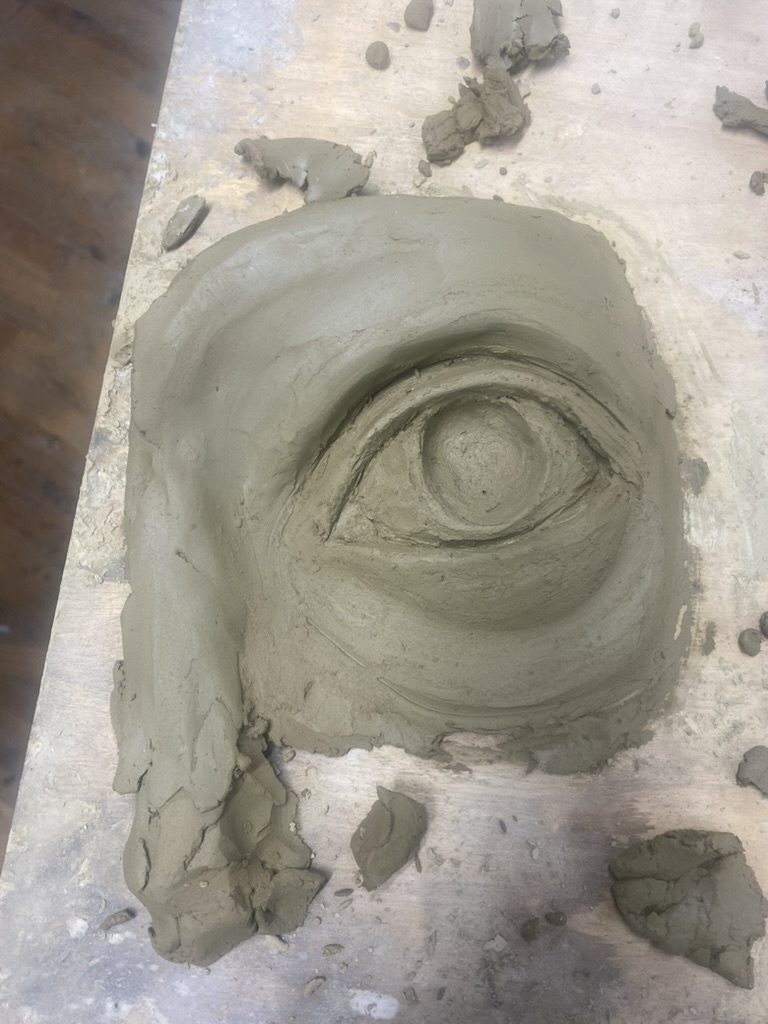
Starting next week I’ll go there twice a week. Finally I have a space for sculpting and hopefully will have a regular practice throughout the year. I am going to enter 2027 as a sculptor.
Ernest Cole: Lost and Found

On Saturday we saw a documentary about Ernest Cole, a South African photographer who took thousands of photographs exposing the sheer horror of the apartheid regime. The documentary tells the story of 60 thousand negatives mysteriously found in a safe of a Swedish bank. Who put them in this safe, who paid for them all these years is still a mystery. It was not clear to me if this was a conspiracy to hide those photos from public or simply an act of goodwill to protect Cole’s legacy. The documentary is somewhat ambiguous about this.
Last November I visited an exhibition of Steve McCurry’s photographs. The photos he took in Kuwait during The Gulf War made me think “wow, The Gulf War did happen”. These photos were not about the military power of USA nor the destruction of Kuwait. They were about the dust and smoke obstructing the sun, camels hastily running away from conflict zone and grenades that didn’t explode. They were images, yes, but they were taken within the cracks of the spectacle.
Ernest Cole’s photography made me feel similar about the apartheid. Photos he took were not about the cruel treatment of Africans by white colonialists. They weren’t victimizing Africans and evoking pity. They were exposing the sheer truth of daily life in South Africa, documenting the regular treatment of blacks by whites. Signs on walls that say “whites only”, an escalator that says “Goods & Blacks”, how a white person looks at a young black man interrogated by the police. These everyday moments were what constituted the ideological fabric of the apartheid regime.
Audiobooks
I was not a believer in audiobooks before this week. Many friends recommended me to listen to them but I never knew how. I don’t like walking outside with my headphones. I don’t use headphones at the gym. When can I find time and space where I can listen to a book?
Last week one of my colleagues said that he listens to books while brewing coffee. That clicked. I spend at least 30 minutes a day brewing coffee and sometimes I like to watch youtube videos while brewing. I could simply replace youtube with an audiobook and I did.
I’m now listening to Heart of a Dog by Mikhail Bulgakov. I listened it only while brewing coffee or unloading the dishwasher and today I finished 60% of the book. This is not something I can do for non-fiction because I like to highlight and take notes but for fiction it makes sense and is enjoyable.
Reply to this post by sending an email to ege [at] hypersubject [dot] net