ege's weblog

Sunday, 7 June 2026

Integrating standard.site with My Hugo Blog

If you are part of indieweb, you probably noticed people talking about standard.site. It’s a recent addition to AT Protocol to publish long form content. You might think of it as POSSE on steroids.

I spent hours today figuring out how to integrate my blog with standard.site. It was not as hard as I thought thanks to David Bushell and Mat Marquis.

The first thing you need to do is sign in and create a site.standard.publication record on Atmosphere Explorer:

{
  "url": "https://hypersubject.net",
  "name": "ege's weblog",
  "$type": "site.standard.publication",
  "description": "We must reclaim the cyberspace.",
  "preferences": {
    "showInDiscover": true
  }
}

Protip: Leave Collection and Record key empty when creating the record to use default values. Record keys are subject to strict validation rules.

Then you need to create .well-known/site.standard.publication at the root of your site.

$ cat static/.well-known/site.standard.publication at://did:plc:32534e3a5wza2m3omyuflhm3/site.standard.publication/3mnmnwcnftk2i

did:plc:32534e3a5wza2m3omyuflhm3 is my account, 3mnmnwcnftk2i is the record key of the publication.

I also put the following into <head>:

<link 
  rel="site.standard.publication"
  href="at://did:plc:32534e3a5wza2m3omyuflhm3/site.standard.publication/3mnmnwcnftk2i" />

This is all I needed to do to register my blog on AT Proto. The rest is creating site.standard.document for each blog post like this one:

{
  "path": "/entries/2026/01/we-must-reclaim-the-cyberspace",
  "site": "at://did:plc:32534e3a5wza2m3omyuflhm3/site.standard.publication/3mnmnwcnftk2i",
  "$type": "site.standard.document",
  "title": "we must reclaim the cyberspace",
  "publishedAt": "2026-01-01T09:33:17.000Z",
  "textContent": "The internet I grew up in no longer exists.\n\nThe internet, with its hyper-fast communication flows, was meant to enable the\nnew golden age for humanity. We were promised to have a global village where\ntribes transcend the limitations of geography. We could find our people\nwherever they were. Our ideas, our niche interests were supposed to connect us\nwith others in the vast network of nodes. If, only if, we can discover them.\n\nInstead, what we got is the commodification of communication. The connection\nthat was promised to us has been reformatted in terms of the market: \"How can a\npractice, experience, or feeling be monetized?\" Yes, discoverability is solved\nthanks to search engines and social media platforms. But now we connect, not to\neach other, but to the algorithm. We no longer contribute ideas to each other,\nbut to the circulation of the \"content\".\n\nWe must reclaim the cyberspace.",
  "canonicalUrl": "https://hypersubject.net/entries/2026/01/we-must-reclaim-the-cyberspace"
}

I didn’t want to create records manually, so I started looking for solutions. To my surprise, I couldn’t find an SDK for AT Proto in go. But there’s goat (go at [protocol]). Unfortunately it didn’t allow me to create site.standard.document records:

$ goat record create doc.json 
error: API request failed (HTTP 400): InvalidRequest: Unknown lexicon type: site.standard.document

Protip: Even though I couldn’t use goat to create records, it can delete them. Since I figured out the integration through trial and error, it came in handy:

$ goat record ls did:plc:32534e3a5wza2m3omyuflhm3 \
	| grep document \
	| awk '{print $2}' \
	| xargs -I{} goat record delete -c site.standard.document -r {}

Then I found Sequoia. It’s a “simple CLI for creating standard.site documents from your existing static blog.” It’s not that flexible (yet) but very simple to use.

$ sequoia auth # authenticate with an app password
$ sequoia init # configure publisher
$ sequoia publish # create site.standard.document records
$ sequoia inject # inject <link> elements to each blog post for validation

It’s also able to post on Bluesky when you publish a new blog post. Very handy.

Finally, I confirmed that everything works with Standard.site Validator.

I’m not sure if standard.site will turn out to be something important but today it feels like a good step forward for the indieweb. And since it’s not intrusive and easy to integrate, I encourage you to publish your content on AT Protocol.
Sunday, 31 May 2026

May 2026 Monthly Dump

Things I read (and enjoyed)

In a technopoly, the only ideas and thoughts that have social and cultural legitimacy are those that support, are supported by, and are mediated through technology.

Books entered my to-read list

  • One Man’s View of the World by Lee Kuan Yew
  • How China Became Capitalist by Ronald Coase and Wang Yin
  • The New China Playbook by Xin Kewu
  • River Town by Peter Hessler
  • Has China Won? by Kishore Mahbubani
  • The Work of Art in the Age of Mechanical Reproduction by Walter Benjamin
  • Illumine Lingao by Xiao Feng
  • Spinoza, Atheist by Steven Nadler
  • Hierarchy in the Forest: The Evolution of Egalitarian Behavior by Christopher Boehm
  • Inventing the Renaissance: The Myth of a Golden Age by Ada Palmer
  • Symptom Invented: Lacan and the History of Marxism by Max Maher
  • Hayek’s Bastards: Race, Gold, IQ, and the Capitalism of the Far Right by Quinn Slobodian

Movies entered my watchlist

  • Femme Fatale (2002), directed by Brian De Palma
  • The Conformist (1970), directed by Bernardo Bertolucci

Fragmented Updates

A lot was happening this week. So here are fragmented updates instead of a single overarching theme.

  • Thirteen years ago today, the Gezi Park protests started in Istanbul. Those were glorious days of a rebellion that was and still is unmatched in terms of scale and spirit. We lost eight of us in those days. May they ever live on in our fight for justice and freedom.
  • We are moving! After spending the last 3 years in Beyoğlu, we are moving back to our old place in Bakırköy, which was nicer in almost all aspects except the location: rent, space, parking spots, noise. The biggest downside is of course proximity to our dear friends…

  • I was on paid time off since Wednesday, so we had some time to watch three movies:

    • One Battle After Another (2025): After all the fuss this movie made last year, I was very curious about it. I found the portrayal of revolutionaries too caricatured, but it was nevertheless an enjoyable watch. See Žižek’s review.
    • Sentimental Value (2025): This was a very slow-burning movie but I liked it. I posted about this on Mastodon: “One can endlessly psychoanalyze the characters of the movie but it was ultimately about making peace with Home.” Also, I think this was my biggest exposure to Norwegian and I was fascinated by how beautiful it sounds.
    • Project Hail Mary (2026): I kept hearing about this movie the last few weeks and, being always thirsty for science fiction, we decided to watch it. I really really enjoyed the friendship between Grace and Rocky so much that everything else about the movie was shadowed by it. Because of the camaraderie between them, Project Hail Mary is now located closer to RRR (2022) in my vector space. See Marta’s review focusing on the politics of the movie.
  • I started playing World of Warcraft Classic with a friend primarily to have a gathering location in cyberspace. I remember how boring it was to kill monsters to complete quests when I was into MMORPGs years ago. To my surprise, I now find it relaxing to mindlessly farm and loot.

  • Susan Sontag’s essay collection On Photography had been sitting in my book pile for a long time. This week, on a whim, I opened it and started reading the first essay, “In Plato’s Cave.” This was my first experience reading Sontag; I can definitely say that I’m impressed by her foresight:

It would not be wrong to speak of people having a compulsion to photograph: to turn experience itself into a way of seeing. Ultimately, having an experience becomes identical with taking a photograph of it, and participating in a public event comes more and more to be equivalent to looking at it in photographed form. That most logical of nineteenth-century aesthetes, Mallarmé, said that everything in the world exists in order to end in a book. Today everything exists to end in a photograph. — Susan Sontag, In Plato’s Cave

Thursday, 28 May 2026

digital communities i found in the wild

A few months ago I was reflecting on my need for a digital community:

I find myself once again yearning for a digital community. I believe the future of social media (for me) is some kind of invite-only group chat where the conversation flows like a river. It might live in Discord, Slack or even IRC, I don’t care. Physical community is important but as a millennial I need text-based friendships too.

Maybe I should have said hypertext instead of text-based. Hypertext is more than just text. Hypertext is images, links, pages… It’s the internet in its labyrinthine ways. This was also my thought process when I decided to start blogging on this domain, hypersubject.net. I was looking for a space where I can express myself, my subjectivity, via hypertext. Hence I merged the two: hypersubject.

Since creating hypersubject.net, I have been on a constant lookout for communities that I could participate in. I found a few in the wild.

I believe one should not make legible what depends on illegibility for its mere survival. The communities I list below, to the best of my knowledge, don’t depend on illegibility. They don’t really operate in public; all are either gatekept or have their own initiation processes to allow new members. However, if you think this post is exposing a community, let me know and I’ll take care of it.

Continue reading → 574 words · 3 min read

Monday, 25 May 2026

Emergency Brake

It was a packed weekend, so I couldn’t publish the weekly update on Sunday. Another one-day-late edition.

Fascism became a catch-all phrase for leftists to criticize their adversaries. It is a term that has a historical meaning, and I don’t want to repeat the same mistake of muddying the definition. By fascism I mean:

  • consolidation of power in a single powerful leader,
  • dismantling of all institutions to remove any safety brakes in the system,
  • controlling a large part of the economy and corporations,
  • ultranationalist rhetoric,
  • cult of regenerative violence,
  • separating society into two blocs: decent citizens and indecent others,
  • cancelling elections or rendering them meaningless.

Today, Turkey is at high risk of being ruled by a proper fascist government. Out of the pillars of fascism that I listed above, four of the seven are firmly in place, two are forming:

  • Erdogan was the strong authoritarian leader from the start in 2002; he reached the peak of his power in 2017 by changing the constitution after the failed coup d’état in 2016.
  • Since 2008, all major institutions were either taken over or shut down. It started with the military, then the media, and lastly the whole legal system.
  • The government controls many conglomerates directly, and others need to align themselves with it under the threat of otherwise being unable to do business.
  • Nationalism is at a strange point right now. Between 2013 and 2024, government supporters were the primary nationalist group, with smaller groups on the opposition side as well. The balance changed after the government started peace talks with the Kurdish armed organization PKK. Today, there is a strong ultranationalist reaction against Kurds, especially on the opposition side. Erdogan is overseeing the whole resolution process with the PKK from a safe distance, so he still has room to maneuver and channel the reactionary nationalist sentiment for his own gain.
  • I don’t think the violence is institutionalized, but cliques in the government are experienced in doing psyops through conventional and social media to amplify the bloodthirsty demands of radical groups (“slaughter all stray dogs”, “deport all the immigrants”).
  • Erdogan and his AKP separate society into two: immoral atheist laics and decent Muslim conservatives.

In 2025, they started putting together the last pillar: no elections. It started with arresting the popular presidential candidate of the opposition, Imamoglu, the mayor of Istanbul, in March 2025. Last week, it reached its peak with removing the whole leadership of the main opposition party from their posts through legal shenanigans. Today, the risk of fascism is higher than ever.

We have been protesting every day since Friday. The numbers on the street were not huge—definitely lower than what we had when Imamoglu got arrested. Nevertheless, the bright side is that we didn’t give up; there are still people who care to resist. Is it going to be enough? I don’t think so. We desperately need something that can radically redefine the rules of the game, because we are losing the one Erdogan defined. As Hannah Arendt describes, totalitarian systems are capable of eventually restructuring reality to make it coherent with their goals. What we need in Turkey right now is a revolution—not the revolution as the locomotive of history as Marx puts it, but the Benjaminian revolution as the emergency brake.

Previously.

Tuesday, 19 May 2026

Monday, 18 May 2026

antilibrary

I have too many books, especially in digital form. Whenever a book piques my interest, I immediately seek it out, acquire it by any means possible, and at least read its table of contents. This of course results in piles of books that I will never manage to read. As my knowledge expands, the pile keeps getting bigger.

This is not an unknown phenomenon for knowledge seekers. Umberto Eco had a huge library, more than 30,000 books. Nassim Nicholas Taleb, in his book The Black Swan, describes Eco’s library as the antilibrary:

[Umberto Eco] separates visitors into two categories: those who react with “Wow! Signore professore dottore Eco, what a library you have! How many of these books have you read?” and the others – a very small minority – who get the point that a private library is not an ego-boosting appendage but a research tool.

Read books are far less valuable than unread ones. The library should contain as much of what you do not know …. You will accumulate more knowledge and more books as you grow older, and the growing number of unread books on the shelves will look at you menacingly. Let us call this collection of unread books an antilibrary.

In this sense, your library defines the borders of your knowledge. As your knowledge expands, your library grows in size. However, not every inch inside the borders is under your dominion. To exercise control over them, one needs to see them like a state. Just like the sovereign state holds censuses and fractures the land into taxable portions, the antilibrary needs to be indexed and cataloged. Not every pile of books is an antilibrary; most are just decor signaling knowledge.

I have been thinking about how to make use of my antilibrary for a long time. If I put on my engineering hat, I come up with these requirements:

  • Having an up-to-date index of all books with accurate metadata
  • Ability to perform full text search on all books or a subset
  • Ability to reference search results by exact location in the book

Index and metadata management can be handled by Calibre, while full text search is handled by Recoll. I’ve started experimenting with these tools, but I find the user interface of Calibre very clunky and the search results in Recoll hard to parse. The engineer in me wants to build. But I don’t want to be the guy who starts learning LaTeX to write his doctoral thesis and ends up with no thesis and still no LaTeX.

#lazyweb, do you have any suggestions?

Sunday, 17 May 2026

syzygy photolog

the biggest news of this week was definitely the exhibition at OtonomArt. after ~50 hours of work, it was so exciting to put Syzygy on display. it was also thrilling to see my name as the artist on the label.

i’m glad i photographed the sculpture after every session so i could see the gradual process. now, looking back, i find it eerie to look at the first photos. i created this thing from mud with my bare hands!

Continue reading → 79 words

Saturday, 16 May 2026

exoticizing the writing

one of the most eye-opening videos on youtube for me was anna p. foxen’s exoticizing the impossible, in which she talks about a common spiritual failure mode where the practitioner, being overfocused on the extraordinary, misses the beauty in mundane reality.

i was thinking about this in the context of my relationship with my blogging. i published over 30 posts in all three of my blogs this year. it’s a feat that i am proud of. but i still couldn’t manage to eliminate the friction of writing and publishing. i believe the most important task of the creative is to eliminate friction in creating. maybe quantity doesn’t guarantee quality but lack of quantity guarantees the impossibility of quality for sure.

what’s blocking me from publishing more? the easy answer is lack of time. i’m a busy person with a demanding day job, political duties and ambitions, hobbies, a wife whom i care about… of course, it’s not easy to find time to sit and write. i need at least an hour to write a 600-word, low-effort post. the problem with this excuse is that i know i can find the time.

the real problem is exoticizing the writing. drafts are piling up waiting for me to read three books for each. i am trying to make an elaborate argument tying together jung, land, hegel, lacan while preserving my dignity by not producing utter bullshit.

in the meantime there is a vast world of blogs where people write a few sentences about an article they read or a link they found interesting. they might be mundane but who could say that they are not the building blocks of something bigger? isn’t this the point cory doctorow was making few years ago?

maybe it’s time to make peace with the ordinary.

Monday, 11 May 2026

the late edition

One day late reflection on the previous week.

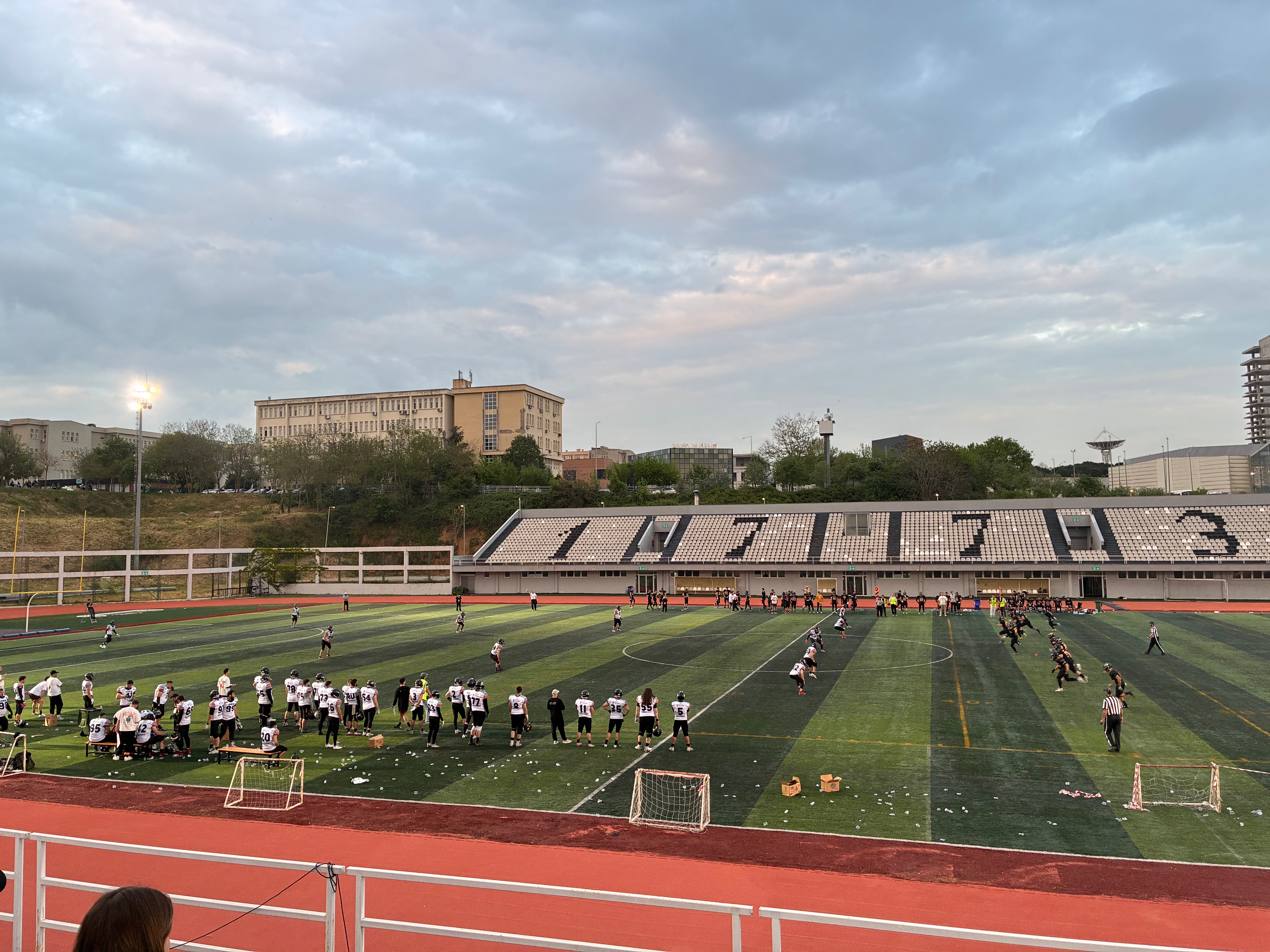
Last weekend was so busy that I couldn’t find an hour to sit and write a few paragraphs. Yesterday, we had a Mother’s Day dinner with my in-laws (where did the morning go? who knows!). On Saturday, I watched my first ever American football game. My hometown team, the Halcyons, was playing against the ITU Hornets. Unfortunately we got our asses kicked by the Hornets, but it was fun either way!

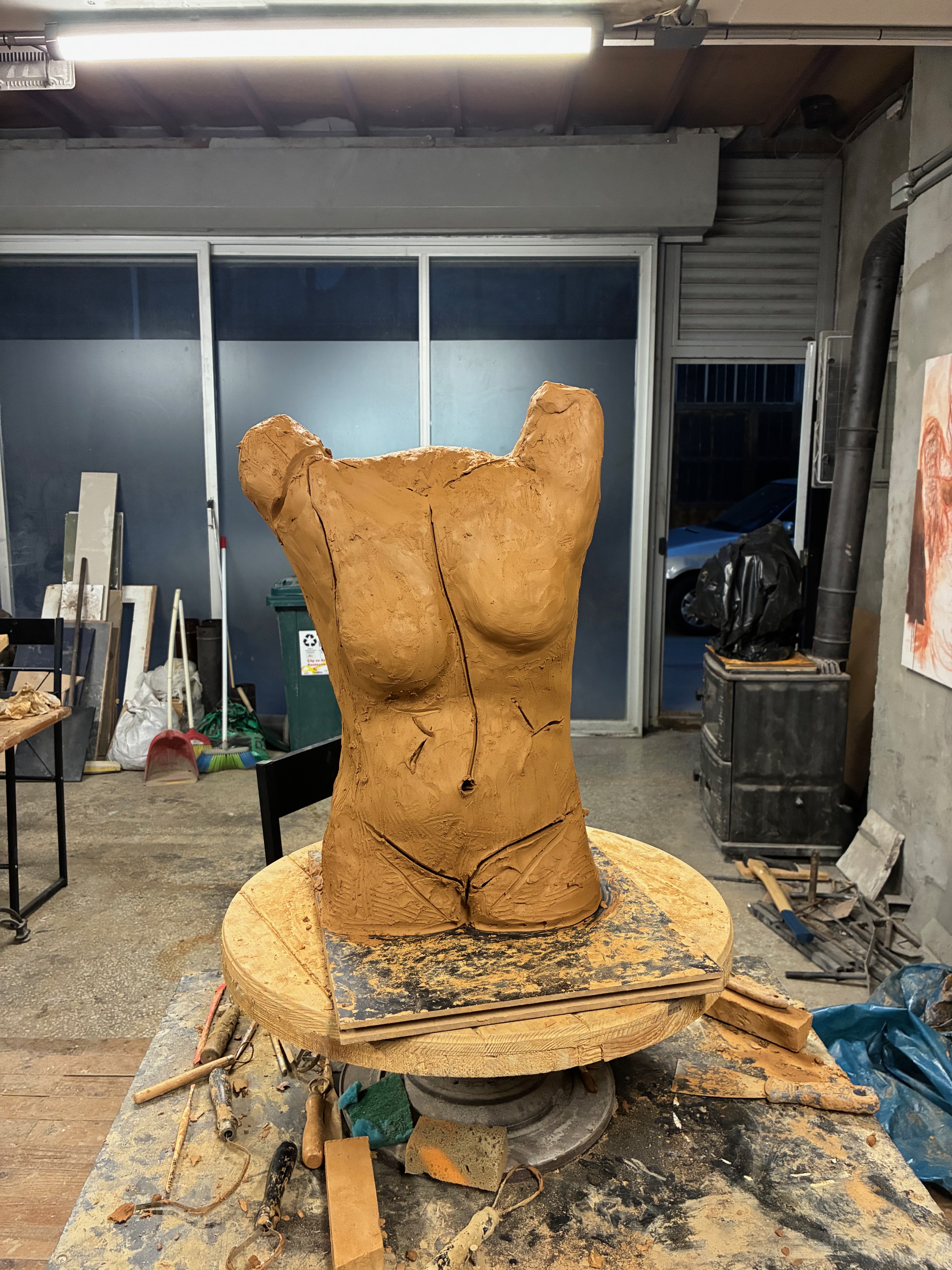
On Friday, thanks to my $employer’s FryDay policy where we have a 4-day work week once each quarter, I spent 6 hours in the atelier sculpting. One thing that always surprises me about sculpting is how physically demanding it is. I rarely fall asleep on the couch, and Friday evening was one of those rare occasions. I started working on a new piece: this time I’m doing an (all) female torso.

I think these are all the things I can mention in the life-updates category. But I also want to share some links:

  • My wordy webring neighbor Martha started a substack. From time to time I also think about starting one to be more “discoverable”. It happens especially after writing something that I’m proud of, so it’s no surprise to see her announcement after this post. Then I remember what competing for attention felt like on Twitter and say “no, thanks.” Also, I don’t know when or how it happened, but when I see a substack.com link I start to have the same kind of bodily feeling as when I see medium.com.
  • Ironically, I will share a Substack link now, but this is not a mere substack — this is Astral Codex Ten. Scott wrote about taste and art, which I find related to what I obliquely described in Oblique Art.
  • Lastly, I really enjoyed this essay questioning the meaning of home by Mikhail Minakov.