ege's internet weblog

Sunday, 22 February 2026

On Writing, Envelopes, and the Female Gaze

Another Sunday, another weekly reflection post.

This is the 8th week since I created hypersubject.net. The effects of this experiment are already tangible. Compared to last year, I have already spent twice as many hours working on my blog(s) and nearly half that time writing even though we are only two months into 2026. I have already published 12 posts this year, which is far more than my total output for all of 2025.

Two weeks ago, I decided to write a blog post every day. Unfortunately, it didn’t work out. It’s better to focus on what I can accomplish rather than beating myself up for things I simply cannot. This week, I visited an exhibition of Bedri Rahmi Eyüboğlu’s drawings on the envelopes of his letters. In one of the letters, he writes about how writing letters is difficult and requires one to find an opportune time for it. It’s exactly the same for blog posts; they demand their own time and space to emerge.

Bedri Rahmi Eyüboğlu, Autoportrait on envelope

Bedri Rahmi Eyüboğlu, Autoportrait on envelope

My wife and I started watching The Museum of Innocence, a miniseries based on Orhan Pamuk’s novel. When she first suggested it, my initial reaction was negative—I have a natural aversion to anything popular. But I caved, and I’m glad I did. This might be one of the best things I’ve watched in my native language. And the directing… Zeynep Günay is doing something magical. In many scenes, I thought, “Where has this level of directing been in other Turkish works?” I haven’t read the novel, but I am certain the director’s female perspective has only elevated the story. One could talk about obsession, repetition, and the objet petit a for hours. I would, if I were Žižek—but I am not.

Speaking of the female perspective on the silver screen, this week I watched Hamnet, directed by Chloé Zhao. It’s easily the best movie I’ve seen recently. I don’t think it’s enough to say the movie is feminine; I would say the movie is a woman1. It tells the story of William Shakespeare by telling the story of his wife, Agnes Hathaway. If I could describe the feelings the movie awakened in me, I would be a candidate to put my name right up there with Shakespeare himself.

It was impossible to hold back tears in this scene.

It was impossible to hold back tears in this scene.


  1. Portrait of a Lady on Fire, written and directed by Céline Sciamma, was also like this. ↩︎

Tuesday, 17 February 2026

Sunday, 15 February 2026

yearning for a digital community

I find myself once again yearning for a digital community. I believe the future of social media (for me) is some kind of invite-only group chat where the conversation flows like a river. It might live in Discord, Slack or even IRC, I don’t care1. Physical community is important but as a millennial I need text-based friendships too.

On Friday, I got a message from kerey on WhatsApp saying that “there is a need for a non-normie consortium”. It triggered a long conversation about the normie/non-normie dichotomy and whether this type of distinction is elitist or not. I collected my thoughts on this in Against the Non-Normie.

This type of interactions is at the heart of my ideal community. An off-hand remark starts a discussion where we argue and develop the idea and in the end this turns into some kind of writing. Then this writing gets responses from other members in the community in a variety of forms. A community that perpetually creates discourse for discourse’s sake.

This is not something that I might just land on. This type of community requires someone to build it from the ground up. “Somebody has to, and no one else will.”

Speaking of Against the Non-Normie, I feel a bit uncomfortable about that piece. I believe what I said there but I feel uneasy because of the process I wrote it with. During our conversation, kerey raised the similarity between non-normies and queer community. Since gender studies and queer theory are not my forte, I asked Gemini to make the connection:

So I used AI. This might be an acceptable use of AI but I also copied two sentences from its output:

  • “The ’normal’ (heteronormative) subject only exists because it has successfully ‘cast out’ (abjected) anything that threatens its boundaries.”
  • “Reclaiming ‘Queer’ is an act of strategic essentialism; it’s taking the site of your own exclusion and turning it into a fortress for survival.”

These are not things I couldn’t write myself but they were just sitting there for me to copy them. But the fact that I copied them verbatim into my post makes me feel ashamed. I don’t believe this stains the whole post and makes it slop though. Maybe I think too black-and-white about the AI problem. This will be a problem I will need to navigate in the near future.


  1. My preference would be an IRC server to scratch my hacker itch, but it’s hard enough to make people join a Slack workspace. ↩︎

Friday, 13 February 2026

Against the Non-Normie

“Normie” is a volatile term. Depending on the context, it might refer to atheists, New Agers, people who watch Netflix, people who don’t do drugs, conservatives, liberals, people who care about politics, people who don’t care about politics, people who are optimistic about the future, people who are pessimistic about the future, people who read only fiction, people who don’t read at all, people who read Kant, people who enjoy dancing in the club, people who don’t enjoy dancing, or people who are monogamous. In the end, “normie” is a signifier that points to the outgroup.

If something is in, it means something is out. The outgroup plays a constitutive role for the ingroup identity. The ingroup stabilizes its identity through outgroup. In this sense, normies are needed for non-normies to be able to define themselves.

Does this sound like queer theory? If you define the queer as someone who can’t be confined in heteronormative terms, then non-normies are intellectual queers? On the surface level it seems like this claim has a point. Queers and non-normies really look alike from afar. They both define themselves against a center and use transgression as a tool. You need to look close to tell the difference.

The “normal” (heteronormative) subject only exists because it has successfully “cast out” (abjected) anything that threatens its boundaries. The queer person is the excess, the waste that is refused by the system. Reclaiming “Queer” is an act of strategic essentialism; it’s taking the site of your own exclusion and turning it into a fortress for survival.

Is it possible to say the same for the “non-normie”? Does that identity begin with the experience of being the object of the system’s disgust? No, non-normie doesn’t claim to be cast out. They claim to be superior to the system. In their case, the direction of abjection is flipped: by labelling others as “normies” or “NPCs,” they are the ones performing the act of abjection. They cast the “normal human” out as something less-than-human—mindless, soulless, rule-following automata.

Contrary to the bottom-up identity of “queer”, non-normie is a top-down and elitist exclusion. It follows the familiar script of right-wing hierarchies, where the world is divided into an enlightened ingroup and a mindless, discardable mass. “Non-normie” ideology believes in a natural and immutable hierarchy between people. Non-normie doesn’t want a more inclusive world; they want a world where NPCs recognize their own inferiority.

Wednesday, 11 February 2026

To Say Something

Just finished another session of psychoanalysis. Analysis is by far the thing I least enjoy every week. I mean, it works, at least for me, but it’s definitely not something I look forward to. Because it demands me to say the Thing.

What’s the Thing? No one knows. Is there even a Thing? Probably not. But its non-existence doesn’t mean that it has no effects. Structurally, the analyst occupies the position that demands you to say the Thing. How you react to this feeling is the basis of the analytical relationship between you, the analysand, and the analyst.

I’ve spent entire sessions speaking to fill the air. I made sounds with my tongue and mouth which were somehow intelligible to the analyst, but they didn’t have any substance in them. I spoke just to get through the session. What I said didn’t go anywhere, didn’t unfold into anything, didn’t resurface something forgotten. The worst part is I said them knowing I was not saying anything important.

Sometimes I managed to say something. It was not the Thing, of course, but wrestling with the impossibility of saying the Thing made me say something important. I usually don’t know that I’ll say something substantial until words come out of my mouth. I love those moments. How can I have these kinds of moments more, rather than the hollow talk above? I don’t know.

But there’s one thing I am sure of: Hollow sessions aren’t wasted time. Without the frustration of that hollowness, I never would have said anything. There are “one shot, one opportunity” moments in life where you really ought to say something, and those moments come to those who are in the game.

Tuesday, 10 February 2026

this is my home

Daily blogging is definitely not easy. I couldn’t write a post today :(

I am writing this from the drafts.app and will publish it via an action. I hope I don’t turn this site into twitter. Although, since it’s my site, I can do whatever I want. This is my home; I can behave however I want here. Twitter, on the contrary, feels like a town hall. Yeah it’s crowded, so no one really pays attention to you, but it’s still a public place. I don’t want to go crazy in the middle of a town hall. But if you are at my home (my blog), my rules apply.

Monday, 9 February 2026

Meditations on Collectivity

I wrote five different paragraphs to start this post and couldn’t stitch any of them together. So here are all five fragments.

My ability to do good is limited by my ability to work with others.


Three years ago multiple earthquakes devastated the southeastern region of Turkey. The things we saw were unimaginably bad. Within a few days people started organizing to collect food, clothes, sanitary products etc. I participated in none of it. One day, I felt disgusted with myself. A disaster happened; people were trying to collectively do what they can and I did nothing. Was I really this distant from the people around me? The answer was yes—I was that distant and alienated. I guess it’s no coincidence that I was also depressed as fuck.


There are some words that crumble if I try to define them. Agency is one. I’ll try anyways, even though it feels a bit cringey: Agency is your ability to enforce your will on the world. This definition might sound authoritarian, but I don’t think it is. “Enforcing” takes multiple forms. A ruler enforcing their will upon subjects is definitely the authoritarian version. But can’t there be a collaborative version? Like encouraging or even persuading others? Walking the path for a few steps, then turning back and waving for others to join you?


There is a motto in software development that I really like: “If you want to go fast, go alone. If you want to go far, go together.” It highlights the importance of collective agency. People getting together to build something is a powerful force that no individual can compete with, no matter how “agentic” they are. Unfortunately we’ve buried this feeling. But it’s down there and always ready to be rekindled. Collectivity is the core of the human condition. We are collective beings. We help, influence, persuade, abuse and oppress each other. No matter what we want to accomplish, it involves “the other” in some way or another.


Jenn writes about this collectivity of Effective Altruists (EAs) choosing the most effective charities for donations. It used to involve arguments over complicated spreadsheets in forums. Choosing the most effective way to use money to help others was a collective effort. Now, this is left to “professionals” who curate lists for EAs to choose from. I don’t think being a middle-class philanthropist is what Effective Altruism is truly about.

Sunday, 8 February 2026

writing more

At the beginning of this year, I decided to merge all things I wrote in different corners of the internet. After 5 weeks of that experiment, I decided otherwise. My old writings are worthy in their respective contexts. Visitors of this blog are probably not interested in technical posts about Kubernetes nor political posts about Turkey. And I am not interested in writing about them here.

So, my Turkish writing will continue in bengidoom.com and technical posts in ege.dev. Deciding this was a relief—I don’t need to carry the baggage of old writings here. hypersubject.net is the home of a different persona of mine. A persona that I can use to be more personal and honest on the internet. A persona who can regularly hit publish.

I decided to create this blog after reading about the 100 Days To Offload. I thought I can write two blog posts in a week and at the end of 2026 I’ll have more than 100 posts. This sounds achievable, right? So far I wrote two posts in a week only once. So far the weekly post experiment is going well but I find it hard to write a post in the middle of the week. It’s hard not because it’s hard to find something to write about. It’s hard because things I decide to write for are too ambitious. I have these sitting in my writing backlog:

  • Where is art?: Art is not about the attributes of the artwork but the position it occupies where art is presented. The status of the object as artwork is decided by the symbolic efficiency of the art institution and the symbolic capital of the artist.
  • Politicism: The warning for Economism is a premature optimization as in “Premature optimization is the root of all evil.”
  • The Champion of Passivity: Assuming the role of the champion for a group of people might calcify their passivity.
  • Filling the uncertainty with values: Ideology, as a map of values, is useful to fill the gap between the map and the territory. One should not fear to use ideology to fill the gap but also aim for reducing the uncertainty as much as possible.

These are all topics I deeply care about. I want to write them well. I want to link these for years to come. I want others to link these. I want them to be groundbreaking. This desire is paralyzing. It’s paralyzing because I don’t have a regular practice of sitting and writing words. It feels like being put in a cage fight without doing any sparring first. I need to spar.

#100DaysToOffload is for sparring. Visakanv’s 100 things is also a sparring practice. It’s a practice of quantity over quality to get things started. I think when I decided to write two posts a week, one about a random topic and second for reflecting on the week itself, was too ambitious. Looks like I was thinking that I will only write one post during the week and it will be good.

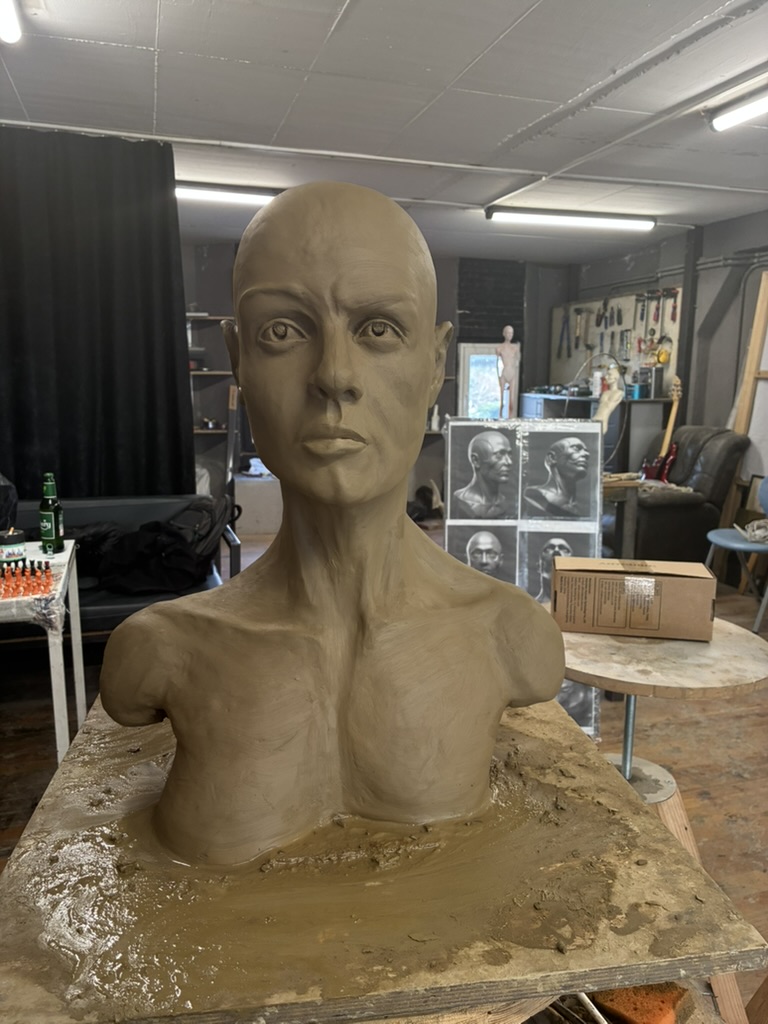
Writing only once a week has another major problem: I let the engine get cold. I went back to the studio for sculpting after a week in Brussels. It was a disaster. I spent two hours on the bust and every point I touched became worse than before. Then I went again the next day and made a lot of progress. Pausing harmed the process and only cure was doing more.

During my career, a lot of junior engineers asked for advice to get better at programming. My advice varied from person to person but one thing was constant: “You need to write code.” I was jokingly saying “You have a lot of bad code in you. You need to vomit it out first to produce something good.” It’s funny that I don’t apply my own advice to my writing.

universe sweetheart was talking about the practice of daily blogging yesterday. Her post contains the famous quote of Scott Alexander about daily blogging: “Whenever I see a new person who blogs every day, it’s very rare that that never goes anywhere or they don’t get good. That’s like my best leading indicator for who’s going to be a good blogger.” The hardest thing about daily blogging is not finding a topic to write about. It’s structuring your day to allocate time and space for the practice. To write regularly one needs to have the habit of writing.

See you tomorrow.

Wednesday, 4 February 2026

libres, ensemble.

Richard Stallman had a Marxian effect on technology in the 1980s. He started the Free Software movement. His ideas mobilized a vast number of programmers and the ideology he initiated still has a great gravity in the software ecosystem. Since the year 2000, thousands of developers travel to Brussels every February like pilgrims for Free and Open Source Software Developers' European Meeting (FOSDEM). I am proud to be among the pilgrims for the second year in a row.

Stallman’s ideas had a tremendous effect on me. I was a law student when I first read about him, free software and open source. Free software, as an ideology, was the primary reason for my interest in programming. It was rebellious, collective and a threat to the status quo. It was the right kind of religion—as Kurt Vonnegut says: “A really good religion is a form of treason.”1

In the halls of Free University of Brussels, thousands of developers gather around to hoard swag from open source companies, write “Fuck Off Google” on the walls and talk about technology. If you ask them about their interest in free and open source software, they’ll mention things like “innovation”, “community”, “privacy” and “freedom”. But if you dig enough you’ll see that their—our—reason distills into simply “being on the right side of history”.

This is why the free and open source community2 resembles Marxists to me. It’s a community formed around an ideology that is rational, progressive and collective and it is unapologetically resistant even in the hardest moments because “what they stand for is just right.” I am a proud member of this community and I truly believe my employer is a bastion of open source software. I hope to be in Brussels many more years and I hope FOSDEM continues for many more years after I pass away.


  1. Kurt Vonnegut, Cat’s Cradle ↩︎

  2. Free software is to open source what Marxism is to social democracy. ↩︎

Monday, 26 January 2026

it's okay

Weekends feel busier than weekdays lately. Time flew, and I just noticed that I didn’t manage to finish this week’s post. This was bound to happen. It’s okay. Shhh… it’s okay. IT’S OKAY! Discipline is not punching yourself into the mold of a wireheaded soldier. Discipline is the ability to flow around, between, and through various slip-ups. Discipline is persistently looking at the horizon. Okay, I needed this pep talk.

Kerey persuaded me to give twitter1 another chance. He said it’s still filled with interesting people (true) and there is still a chance to have meaningful connections with them (also true). My friendship with him started on twitter. Since we met, we’ve published four zine issues together and writing about vastly different things. It’s more or less clear that our friendship and creative collaboration did not stem from shared interests or aligned worldviews; they stemmed from the infamous tpot.

Anyway, I decided to give it a chance—as I usually do— scrolled a bit, and even tweeted something from the hip. Another banger, another only-liked-by-kerey tweet. It felt familiar, even nostalgic.

The timeline made me feel like I traveled back to 2023. It’s crazy how the discourse sounds exactly the same. Rival dunking on Nietzsche to farm engagement, visa continuing to weave elaborate webs by qting himself (and he follows zero people now—wow), lumpen chaining words together that don’t mean anything to me. It’s all the same and yet all alienating.

However, as usual, I got something from doing the thing I resisted: universe sweetheart started a blog. We were following each other with her for a long time, but I don’t think we ever been moots. I’m happy that I’ll be able to read her stuff outside of twitter.

Some links I enjoyed this week:

  • The Story of AI: The real threat of AI is much more mundane than Terminator-like scenarios.
  • A Metabolic Workspace: The author is definitely on something there. But, still, something rubs me the wrong way. First, another productivity post showcasing a process that has only been running for a few weeks. Second, it focuses too much on opposing the concept of Second Brain. I don’t see my Obsidian vault as a second brain; my notes are a garden where I plant whatever is salient to me. Yes, things I stop nurturing die and rot, but that’s part of the process. They turn into compost. I like documenting what mattered at the time. Nevertheless, it’s a good post that forced me to reflect on my own note-taking processes.

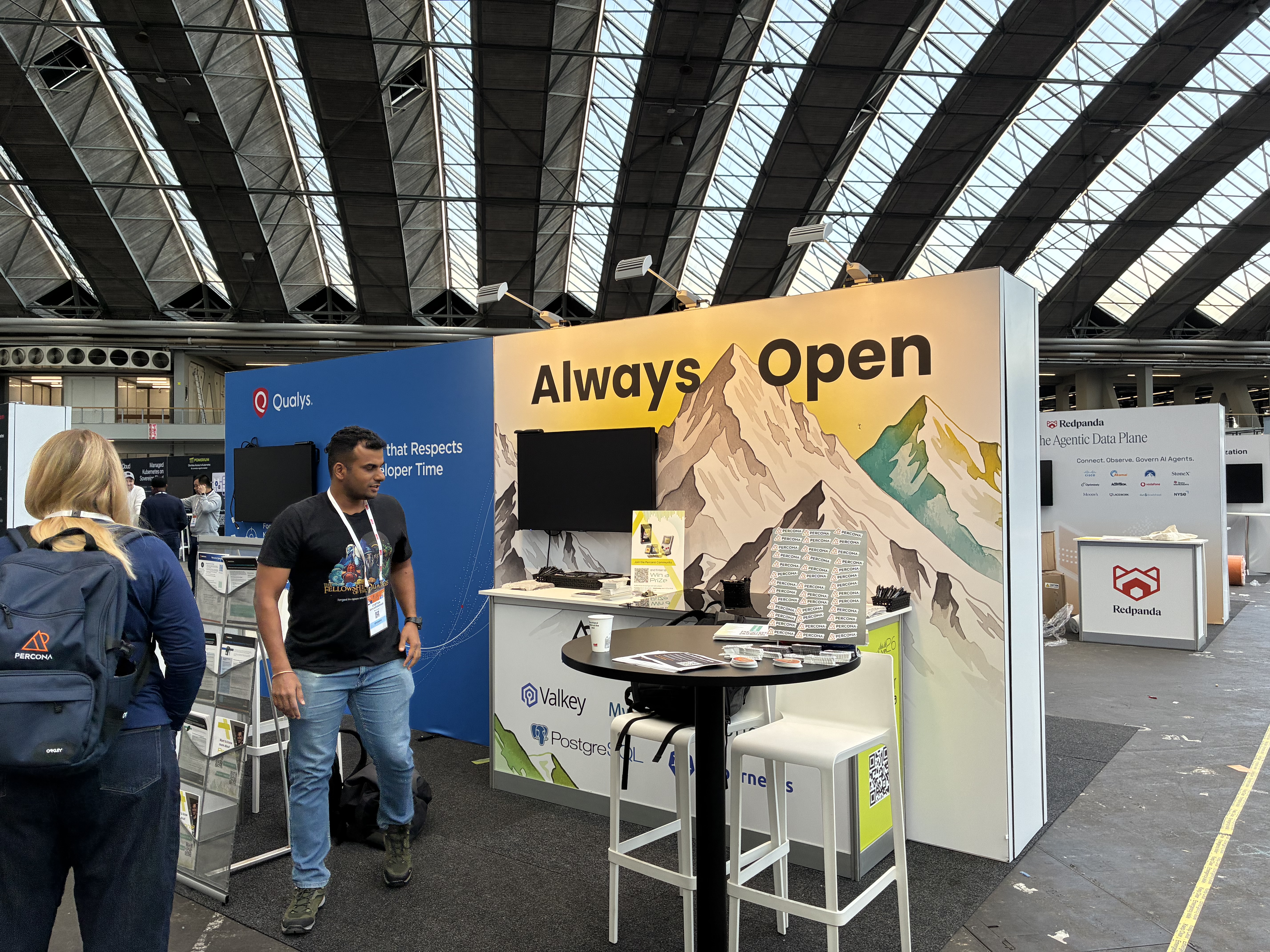
Anyway, I’ll be in Brussels, Belgium, from Wednesday, January 28 to Monday, February 2 for FOSDEM. Wanna grab a coffee? Find a way to contact me (there are plenty of options).


  1. Maybe I should stop calling it twitter and start calling it X. It’s clearly not twitter anymore, and I feel like there’s no point in taking this stance anymore. ↩︎